

If your tween comes home from school overwhelmed, irritable, or completely shut down, you’re not doing anything wrong—and neither are they.
The transition from school mode to home mode is one of the most emotionally demanding parts of a tween’s day. Even when the school day went “fine,” your child has spent hours navigating expectations, social pressure, noise, transitions, and self-control. By the time they walk through the door, their emotional capacity is often running on empty.
This is why after-school meltdowns, shutdowns, or emotional distance are so common—and why a simple, intentional check-in can make a powerful difference.
Why the School-to-Home Transition Matters So Much
Tweens don’t just leave school behind when the final bell rings. They carry the emotional residue of the day home with them—unfinished conversations, social stress, academic pressure, and sensory overload.
When that internal load meets: immediate phone or screen stimulation, inconsistent routines, and unclear or shifting expectations from parents…it can quickly overwhelm their nervous system.
Phones and screens, while tempting as a “break,” often add stimulation instead of relieving it, making it harder for tweens to process emotions. At the same time, inconsistent after-school expectations (“Do homework now… no wait… why aren’t you helping?”) can leave them feeling unsure, defensive, or shut down.
What tweens need most in this moment isn’t a lecture or a demand to talk, it’s a predictable emotional landing space.
The 5-Minute After-School Emotional Check-In
This check-in isn’t about forcing conversation or solving problems. It’s about helping your tween shift safely from school to home while reinforcing: “Your feelings matter here.”
Step 1: Pause Before the Phone (1 minute)
Before screens come out, offer a brief pause.
You might say:
“Let’s take a few minutes to reset before anything else.”
This short buffer gives their nervous system a chance to settle instead of jumping straight from school stress into digital stimulation.
Step 2: Name the Transition (1 minute)
Acknowledging the transition helps tweens feel understood.
Try:
“School takes a lot out of you. It makes sense if you’re tired or done talking.”
This reduces pressure and defensiveness—two big contributors to shutdowns.
Step 3: Invite, Don’t Interrogate (2 minutes)
Ask open, low-pressure questions without expecting full answers:
- “What was the hardest part of today?”
- “Was anything surprisingly okay?”
- “How does your body feel right now—tired, tense, done?”
Your tween may shrug, mumble, or say “nothing.” That’s okay.
The goal isn’t information—it’s consistency.
Step 4: Track, Not Fix (1 minute)
Instead of jumping into solutions, focus on awareness.
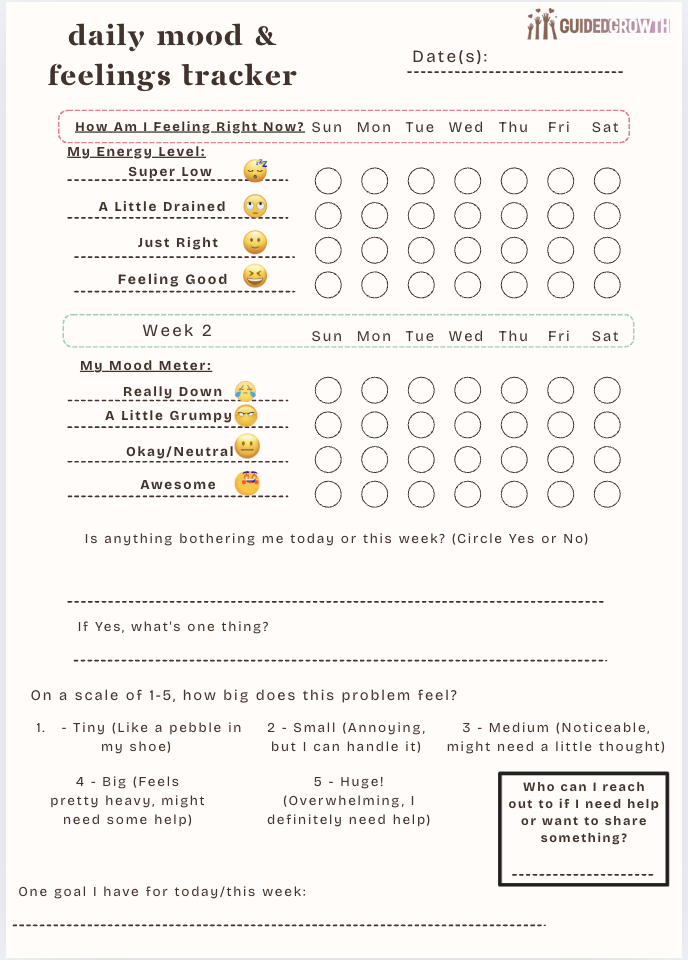
This is where your Daily Mood Tracker fits seamlessly. You can invite your tween to:
- Circle a feeling
- Rate their mood
- Or simply notice how they feel without explanation
Over time, this helps both of you see emotional patterns, especially around after-school stress.
You can download the Daily Mood Tracker here to support this step.
Meltdowns and shutdowns often happen when tweens feel:
- Emotionally overloaded
- Unsure what’s expected
- Or afraid their feelings will be dismissed
A consistent after-school check-in creates emotional predictability, even when the day itself was chaotic.
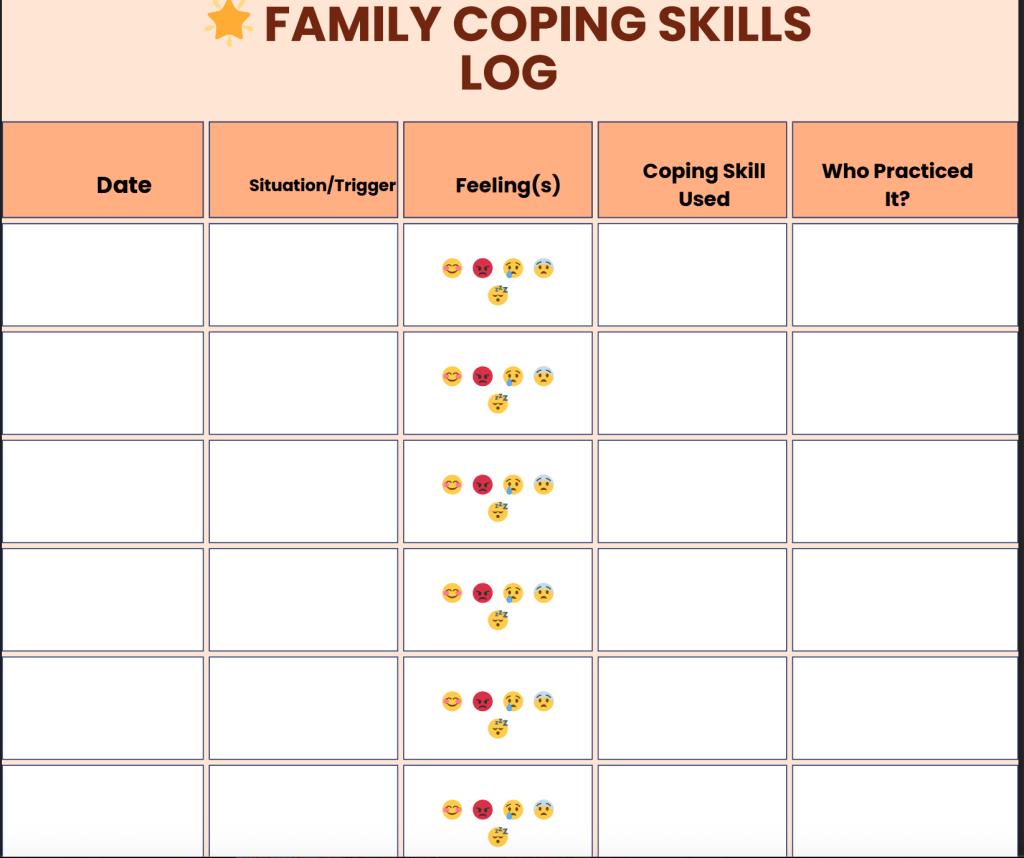
Using a Family Coping Skills Log alongside this routine helps you and your tween:
- Notice what actually helps after school
- Track strategies that calm vs. escalate emotions
- Reduce guesswork during hard moments
You can download the Family Coping Skills Log here to build a calmer after-school rhythm.
This isn’t just about smoother afternoons.
Over time, this small routine helps tweens build emotional awareness, feel safer expressing stress, and trust that home is a place they can land.
And it helps parents move from reacting to meltdowns to understanding what their child truly needs.
You’re not behind.
You’re laying a foundation.
And sometimes, five minutes is all it takes.
 officialguidedgrowth.com
Leave a comment