

If you’ve ever asked your tween, “How was your day?” and received a one-word answer… a shrug… or a quiet retreat behind a closed door, you are not alone.
Between ages 9 and 13, kids begin protecting their inner world. They’re becoming more socially aware, more independent, and more sensitive to how they’re perceived. Communication shifts during this stage. What used to be easy sharing can suddenly feel guarded or minimal.
It’s tempting to think something is wrong.
But often, nothing is wrong at all.
Your tween isn’t pulling away because they don’t need you. They’re learning how to manage a growing internal world — and that can feel overwhelming. The key isn’t finding the perfect question. It’s understanding that the tone you set becomes the model they learn from.
And that tone begins long before you speak.
Start With Yourself First
Before you try to draw your tween out, it helps to pause and gently check in with yourself. Are you carrying stress from your day? Are you feeling rushed, distracted, or emotionally drained? Are you hoping they’ll reassure you that everything is fine?
Tweens are incredibly perceptive. They can sense tension in your posture, urgency in your voice, or anxiety behind a question. Even subtle emotional pressure can make them retreat.
Shutdown isn’t defiance. It’s protection.
When you regulate yourself first — slowing your breathing, softening your tone, unclenching your jaw — you lower the emotional intensity of the moment. You communicate safety without saying a word. And safety is what keeps conversations open.
Sometimes simply reminding yourself, “Connection matters more than answers,” is enough to shift the energy.
One of the biggest shifts in communicating with tweens is releasing the need for visible results. You might ask a thoughtful question and still receive “nothing.” You might try again tomorrow and get a shrug.
That doesn’t mean it isn’t working.
Communication at this age is built through consistency, not breakthroughs.
When you continue to check in calmly — even when they don’t respond fully — you are sending a powerful message: I care about your world. I’m interested in you. I’m here.
Over time, that message sinks in. The goal is not full disclosure every day. The goal is repeated emotional safety.
Replace Interrogation With Invitation
Tweens tend to shut down when conversations feel like evaluations. If a question carries an undertone of correction, urgency, or problem-solving, they instinctively protect themselves.
Instead of leading with “Why didn’t you…?” or “What happened now?” try shifting into curiosity. Gentle invitations like, “What was the best part of your day?” or “Anything surprise you today?” feel less threatening. When they do share something hard, responding with, “That sounds frustrating,” rather than immediately fixing it, keeps the door open.
Curiosity builds connection. Judgment closes it.
There will be moments when your tween shares something that worries you or frustrates you. In those moments, your reaction matters more than your words.
If they see you escalate, panic, or lecture, they learn that sharing creates stress. If they see you stay grounded — even while setting boundaries — they learn that communication is safe.
You don’t have to be perfectly calm. You just need to show that emotions can be handled without exploding or shutting down. When you model regulation, you are teaching them how to regulate.
And that lesson lasts far beyond middle school.
It’s Okay If They Don’t Open Up Fully
Your tween may not suddenly pour their heart out. They may test small pieces of vulnerability. They may retreat and try again another day. That is normal for this stage.
The win isn’t getting every detail.
The win is creating a relationship where they know they can come to you when they’re ready.
Consistency matters more than intensity. Small, steady check-ins build trust far more effectively than occasional deep dives.
You are playing the long game.
Gentle Tools That Support Ongoing Communication
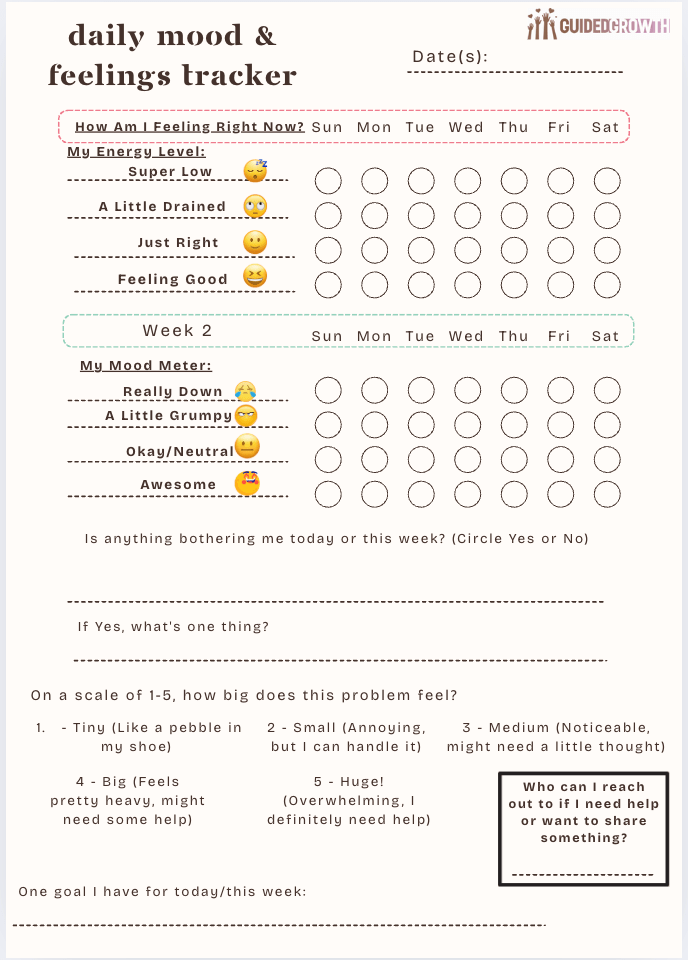
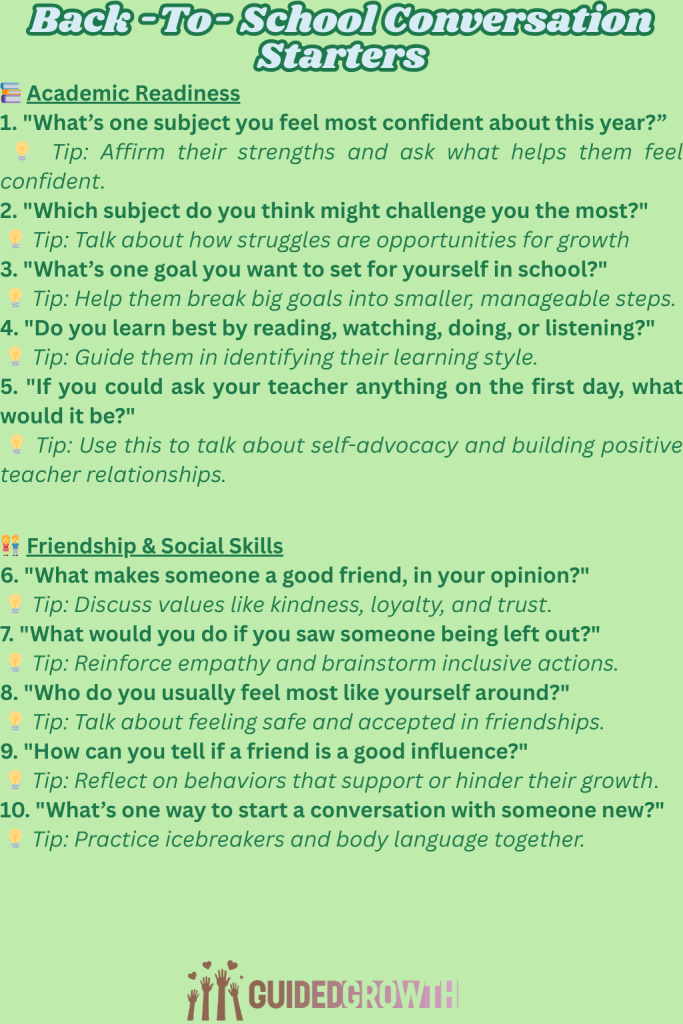
Sometimes it helps to remove the pressure of face-to-face conversation and offer structured, low-intensity ways to connect.
A daily emotional check-in can create that rhythm. The Daily Mood Tracker gives your tween space to identify their feelings privately and share only what they feel comfortable discussing. Over time, this simple habit normalizes emotional awareness and makes conversations feel less intimidating. It becomes part of your routine — not a reaction to a problem.
Download your Daily Mood Tracker here!
In the same way, having thoughtful prompts ready can prevent conversations from feeling forced. The Back-to-School Conversation Starters are designed to gently explore different parts of your tween’s life — friendships, confidence, challenges, teachers, and daily wins — without sounding like an interrogation. Instead of asking the same surface-level question, you’ll have natural ways to show interest in what matters to them.
Download your Back-to-School Conversation Starters here!
The Communication You Model Is the Communication They Learn
Your tween is watching how you handle stress. They notice whether you pause before reacting. They see if you apologize when you overstep. They absorb how you talk about your own feelings.
When you say, “I’m feeling overwhelmed — I need a minute,” you are teaching emotional literacy. When you circle back after a tense moment and repair, you are teaching resilience.
Communication isn’t something we demand from our kids. It’s something we demonstrate.
And even on days when they seem distant, your steady presence is shaping how they will handle relationships for years to come.
Keep showing up.
Keep regulating yourself first.
Keep choosing curiosity over control.
You may not always see immediate openness — but you are building something much deeper.
You are building trust.
 officialguidedgrowth.com
Leave a comment