

If your tween has been more irritable in the mornings, complaining of stomachaches before school, or melting down over homework, you are not alone. School anxiety often increases during the preteen years, and it makes sense when we look at what this stage of life really holds.
Pre-teens are no longer just attending school. They are building identity. Academics become more demanding, friendships grow more complex, and talents start to shape how they see themselves. At this age, children are constantly asking who they are and where they fit. School becomes the main environment where those questions are tested.
Social currency plays a powerful role during these years. Popularity, grades, athletic ability, appearance, humor, and talent can all feel like measures of worth. Pre-teens are reflecting on themselves while also absorbing feedback from peers, teachers, and social media. That ongoing evaluation can feel high stakes and deeply personal. Even small social shifts can feel identity defining.
School anxiety can show up in ways that do not immediately look like anxiety. Your child may avoid certain classes, become perfectionistic, withdraw socially, struggle to sleep before tests, or react strongly to peer conflict. These responses are often signs of a nervous system trying to cope with pressure, not signs of laziness or defiance.
There is also a modern layer of fear that many tweens quietly carry. News of school violence and incidents shared online can heighten worry, even when events happen far away. Tweens are old enough to understand the seriousness of these stories but young enough to feel limited control. Some may not voice these fears directly, yet the worry can surface as clinginess or reluctance to attend school. Creating space to gently ask about safety concerns can help reduce isolation and normalize their feelings.
Helping Tweens Track and Understand Their Feelings
Supporting a tween with school anxiety begins with emotional safety at home. When your child is overwhelmed, focus first on calming connection rather than immediate solutions. Validate their experience by acknowledging that their stress makes sense. When school feels like a stage where they are constantly evaluated, home should feel like a place where they can exhale.
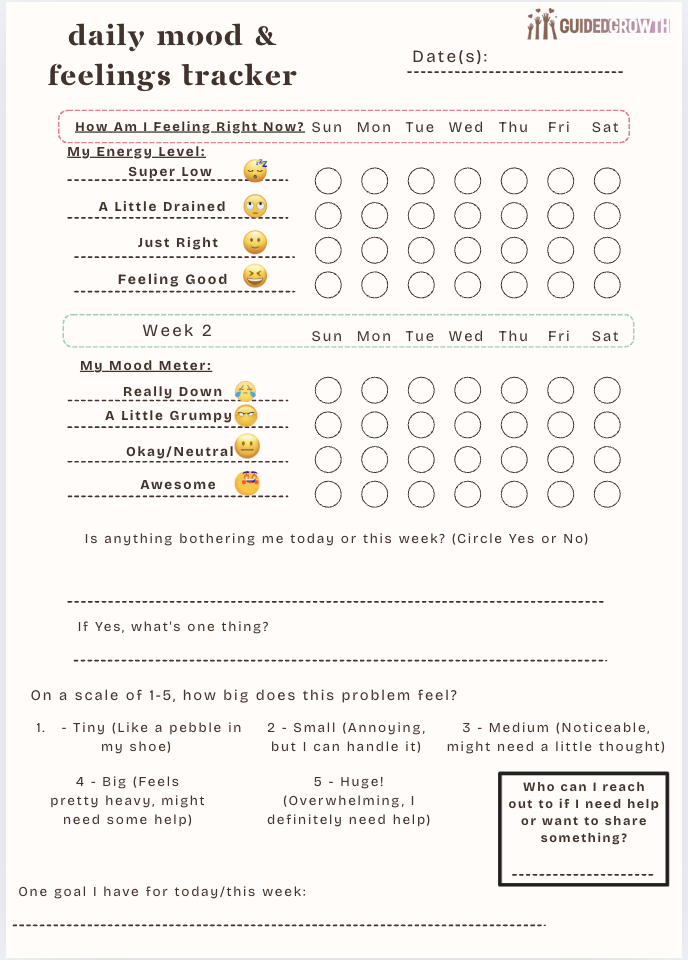
One of the most helpful ways to reduce anxiety is by building emotional awareness. When tweens learn to name and track their feelings, emotions feel less unpredictable and more manageable. That is why I created two simple tools you can use together.
The Daily Mood Tracker helps your tween notice patterns in how they feel throughout the week. Over time, they may begin to recognize which situations increase stress and which activities support their well-being. You can download the Daily Mood Tracker here and begin using it as a gentle daily or weekly check-in.
The Feeling Thermometer helps tweens rate the intensity of their emotions so they can better understand when they need support. Instead of feeling overwhelmed by a wave of emotion, they can begin to say where they are on the scale and choose coping tools that match. You can download the Feeling Thermometer here and use it during stressful school moments.
School anxiety during the tween years does not mean something is wrong. It often means your child is growing, stretching, and trying to understand who they are in a world that suddenly feels bigger and more evaluative. With steady connection, open conversation, and simple tools that build emotional literacy, you can help your tween move through this season with greater confidence and resilience.
 officialguidedgrowth.com
Leave a comment