

If it feels like your pre-teen’s emotions have suddenly become more intense, you are not imagining it.
One moment they are laughing and playful. The next moment they seem frustrated, overwhelmed, or completely shut down. Many parents wonder what changed.
The truth is that the pre-teen years are a time of huge emotional and social growth. Your child is learning how to understand their feelings, navigate friendships, and build independence all at the same time. Their world is getting bigger, and so are their emotions.
Understanding what is happening beneath the surface can help parents respond with patience and confidence.
Big Feelings Are Part of Growing Up
Between ages 9 and 13, children begin developing deeper emotional awareness. They start to notice more complex feelings like embarrassment, jealousy, pride, anxiety, and social pressure.
At the same time, their brains are still learning how to regulate those emotions. The part of the brain responsible for decision making and emotional control is still developing.
This means pre-teens often feel emotions very strongly but may not yet have the skills to manage them smoothly.
What looks like overreacting is often a child trying to figure out what to do with feelings that feel new and powerful.
Another big change during the pre-teen years is the desire for independence.
Your child is beginning to separate from childhood and explore who they are as an individual. They may want more privacy, make more of their own decisions, and solve problems without help.
This can create a tricky balance for parents.
Pre-teens still need support and guidance, but they also need space to try, struggle, and learn. When parents stay available while allowing some independence, children gain confidence in their ability to manage challenges.
Sometimes the most helpful response is simply being present and listening.
Today’s Pre-Teens Face a Different World
Parents today are raising pre-teens in a very different environment than previous generations.
Many children now have access to social media, online content, and constant streams of information at a younger age. They may hear about global events, social issues, or trends that are difficult to fully understand.
This can lead to feelings of anxiety or overwhelm.
Pre-teens may compare themselves to what they see online or feel pressure to keep up with social expectations that exist on digital platforms.
Because of this, it is especially important for families to talk openly about screen time and help children develop a healthy relationship with social media.
Encouraging breaks from screens, outdoor play, creative hobbies, and face to face conversations helps balance the constant stimulation many kids experience online.
Supporting Your Pre-Teen Through Big Emotions
Parents do not need to solve every problem their child faces. What matters most is creating a safe space where emotions can be expressed and understood.
Here are a few simple ways to support your pre-teen:
• Listen without rushing to fix the situation
• Validate their feelings even when the problem seems small
• Encourage problem solving instead of giving immediate solutions
• Set healthy boundaries around technology and social media
• Model calm ways to handle stress and frustration
Over time, these small moments help children develop emotional confidence and resilience.
Sometimes children need simple tools to help them recognize and express what they are feeling.
You can introduce resources like:
Daily Mood Tracker
A simple way for pre-teens to check in with their emotions each day and begin noticing patterns in how they feel. Download yours here!

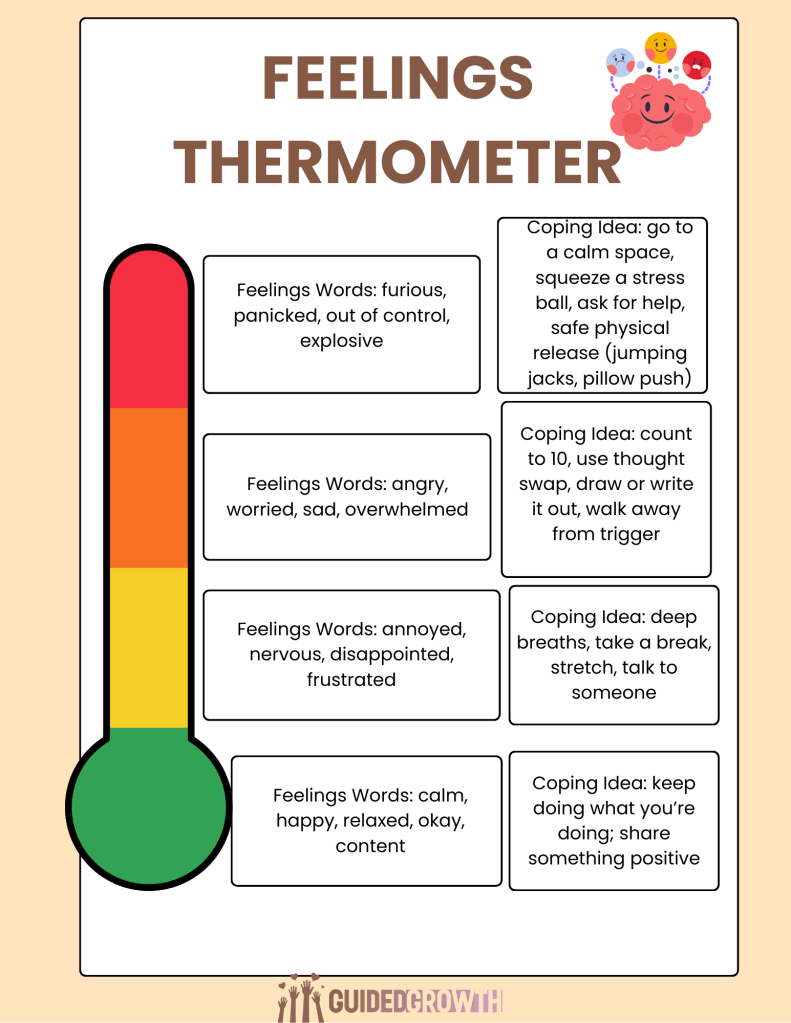
Feelings Thermometer
This visual tool helps children understand the intensity of their emotions and recognize when they may need calming strategies or support. Download this freebie here!
Both tools can help open conversations about emotions while encouraging kids to build self awareness.
The pre-teen years are full of change, growth, and discovery.
Big emotions do not mean something is wrong. Often they are a sign that your child is learning how to navigate a bigger world.
With patience, guidance, and open communication, you are helping them build emotional skills that will support them for years to come.
And sometimes, the most powerful support you can give is simply reminding them that they are not alone!
 officialguidedgrowth.com
Leave a comment